
 Español
 Português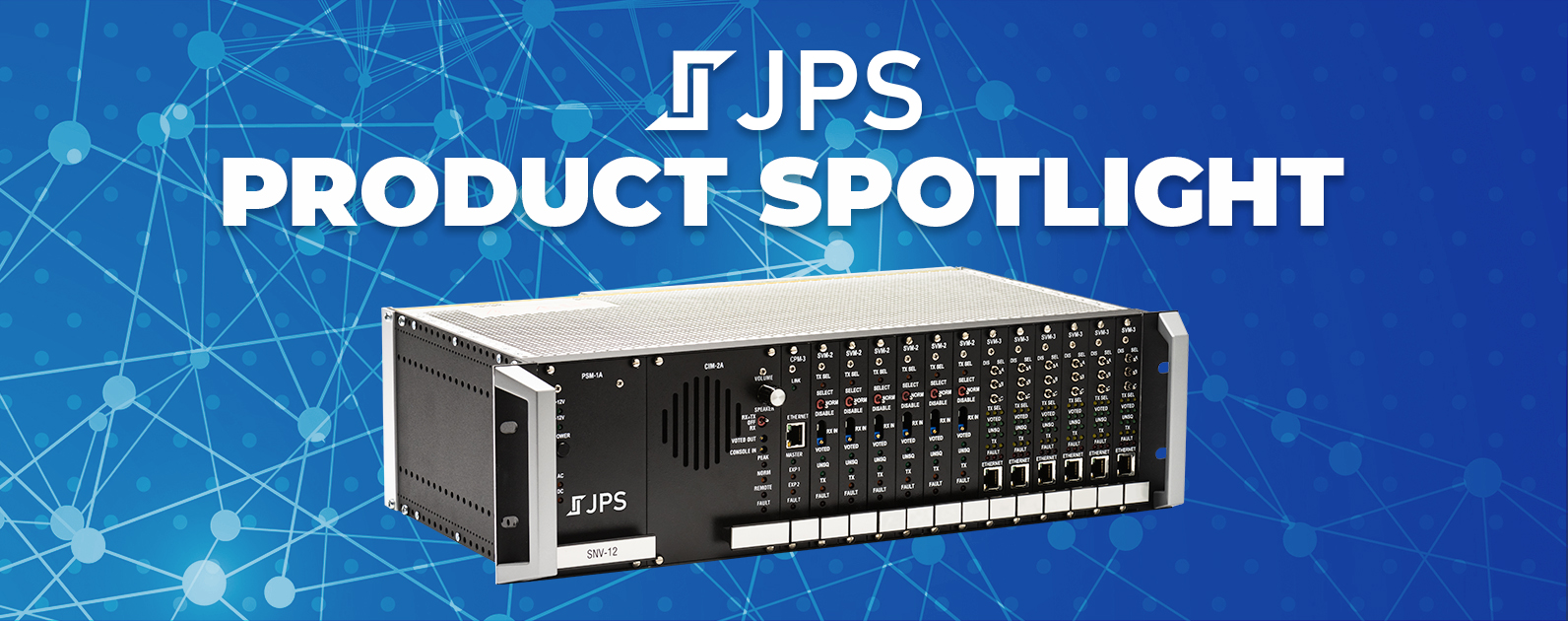
Voter 101: Understanding IP Backhaul on the SNV-12
Modern Solutions with Backwards Compatibility
You almost certainly have some familiarity with the expense, maintenance, and obsolescence of Telco leased lines and the progressive requirement to add IP backhaul to your voter system. However, it may be something you haven’t wanted to address because you’ve been told it’s going to be a hassle. Fortunately, it’s really not that hard to add IP backhaul receiver/transceiver sites to an existing SNV-12 voter system. Here’s why:
- Your CPM-3 software version 3.0 or higher is already prepared for IP backhaul.
- The only new hardware needed at the voter site, the SVM-3 IP backhaul module, fits into any SVM slot in your voter chassis. Fill an unused slot or replace an SVM-2 that isn’t needed anymore. Each SVM-3 can connect to up to 3 different remote IP receiver sites.
- Working with the SVM-3 are QMT-1B remotes. These small units are co-located with the receiver/transceiver and take key measurements needed for system-wide audio synchronization and quality.
- You can have SVM-2 traditional backhaul sites and SVM-3 IP backhaul sites in the same voter system.
- This is not an expensive forklift solution. You can do it at your own pace, when you need to, when it’s convenient.
A Little Background
When JPS launched the SNV-12 Voter, radio traffic from remote receiver and transmitter sites was still primarily over Telco leased lines. When one of these “traditional” backhaul lines is interfaced to the voter, it connects to an SVM-2 module.
With the advent of network backhaul, JPS engineered the SVM-3 IP backhaul module and made it compatible with existing SNV-12 systems. What does that mean exactly? That means you do not need to buy a new voter chassis or get rid of your active SVM-2 sites to add one or more SVM-3s. The SNV-12 Voter can accurately vote with any mix of SVM-2 and SVM-3 modules in the same chassis.
What Exactly is a Site Voter Module (SVM)?
SVMs send signal quality information to the Voter’s Control Processor Module (CPM) for use as the basis for voting.
The SVM-2 is used with analog backhaul where the radio audio and control signals (COR and PTT) are connected directly to the rear panel of each SVM slot via a 20-pin terminal block. Each SVM-2 can interface to one site.
The SVM-3 is used with IP backhaul from up to three QMT-1B remote units (one per site) and does not contain the same adjustment pots, switches, and jumpers as the SVM-2. Instead, the QMT-1B remote provides this interface, connecting to the analog FM radio audio and control signals (COR and PTT). Each QMT-1B remote digitizes the radio audio and streams it to the SVM-3.
- When you replace an SVM-2 with an SVM-3 IP backhaul Site Voter Module in your existing SNV-12 system, you can add up to three IP backhaul sites.
- When using a combination of backhauls, SVM-2s, and SVM-3s, a single SNV-12 can support some number of sites up to 36. That number jumps to 60 in a multi-chassis system.
- SVMs can be “hot plugged” so you do not need to take your whole system offline.
- Add new IP sites or regain access to sites that converted to IP.
- Soft pots and the web-based interface facilitate configuration and monitoring.
- No additional adapters are required at the SNV-12 voter site.
The SVM-3’s Partner: the QMT-1B for Quality, Measurement, and Transport
The QMT-1B works in concert with the SVM-3, but it resides at the RX/TX site, one QMT-1B per site. Instead of using a multiplexer to transport audio and control signals, the QMT-1B has an analog interface with the receiver/transceiver and can detect an Unsquelch condition by either a hardware COR line or by absence of an Idle Tone. When the QMT-1B detects an Unsquelch condition, it begins to accurately:
- Measure Signal Quality (FM Noise) of the receiver analog audio. Taking this measurement at the site increases its accuracy.
- Add time stamps. This lets the voter overcome the differences in latency and jitter that are inherent to IP networks. It also allows audio synchronization, ensuring the FM noise level is accurate, which in turn allows the voter to determine the best site.
- Encode the audio, sending digital audio packets and metadata over the IP network to the SVM-3 module.
Since repeater and transmitter sites are often remote, the simple fact that the QMT-1B is configured and managed using a web-based interface has been of real benefit to customers. For example, when there’s a noisy repeater at 2:00 AM, would you rather get in the truck and drive out to the site in the dark, or jump on a computer and temporarily disable it quickly from home?
Conclusion
Truly modern solutions need to include backwards compatibility. Whether you’re using analog or IP backhaul or a mix of both, JPS Engineering remains committed to keeping SNV-12 Voter systems in line with your needs.
For the end user, that means:
- Protecting your existing hardware investment to save you money
- Software compatibility and updates to give you overall system flexibility
- Little to no downtime when adding new sites
- Reduced operational expenses and real-time monitoring
- Free customer support and free software updates for the life of the product
Bonus FAQ: Why an NXU RoIP Link Isn’t Enough
If you’ve thought about this problem for long, you’re probably wondering why you can’t take some of your old NXUs and repurpose them as an IP backhaul peer-to-peer link. This would be a great idea – if it actually worked well enough.
Reasons it does not work to use NXUs (or other RoIP link):
- Audio codecs don’t transmit noise accurately. As a result, you can end up with noisier sites being voted when they shouldn’t be.
- Latency and jitter cause variations in IP transmission time. (How long and how smoothly packets get from A to B over a network.) Without a valid time stamp, the voter cannot synchronize the audio from all sites in order to vote.
- Without synchronization, the FM noise measurement is inaccurate.
- Without synchronization, the voter cannot transfer to a new voted site during a field transmission without the listener experiencing echoes or missed syllables.
How to Learn More
- SNV-12 Signal-and-Noise Voter Comparator
- QMT-1B IP Backhaul Remote for the SNV-12
- Case Study – Adding IP Site to Existing System
- Case Study – LMR Expansion Using SNV-12 Voter
- Voter Comparator to Improve Railroad Radio Communications