


 Español
 Português
SIGNAL-AND-NOISE
VOTER COMPARATOR
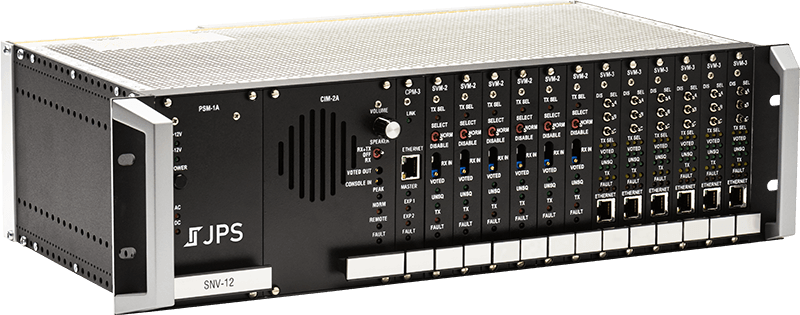
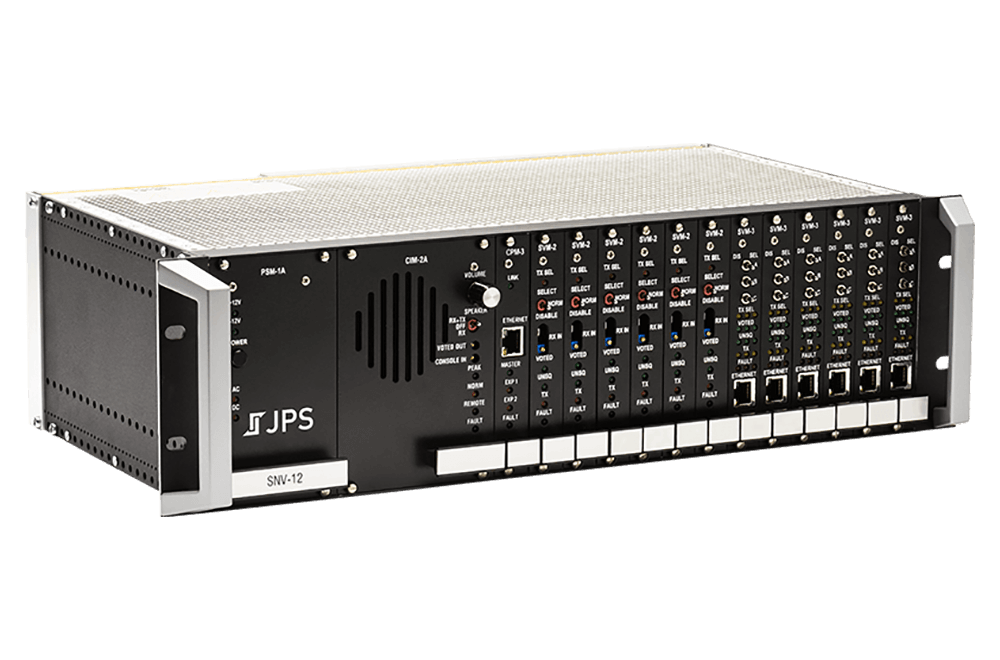
The SNV-12™ Signal-and-Noise Voter Comparator uses Digital Signal Processing to continuously monitor multiple remote receiver sites and select the receiver with the best signal quality.
The new CPM-5 Control Module expands upon existing SNV-12 capabilities: voting up to 108 sites, providing incoming RoIP audio routing, simplifying overall configuration, and adding SNMP capability for monitoring channel status. The CPM-5 can replace a CPM-3 in an existing system, and works with SVM-3B, SVM-3, and SVM-2 modules, which can co-exist in the same chassis.

Superior Audio Quality
Automatically synchronizes all incoming audio. Continuously monitors IP links; loss triggers a fault and removes site from voting consideration until link is restored.

Cost Effective
Enables the creation of extremely flexible, cost-effective radio voting networks. Allows use of existing private networks, eliminating the need for leased lines. System expandable to 108 sites.

Highly Flexible
Dispatcher audio may take precedence over voted retransmissions, or may be set to mix with the repeated audio. System statistics and ability to monitor voted audio available via IP.
Analog and IP Backhaul in the Same Chassis
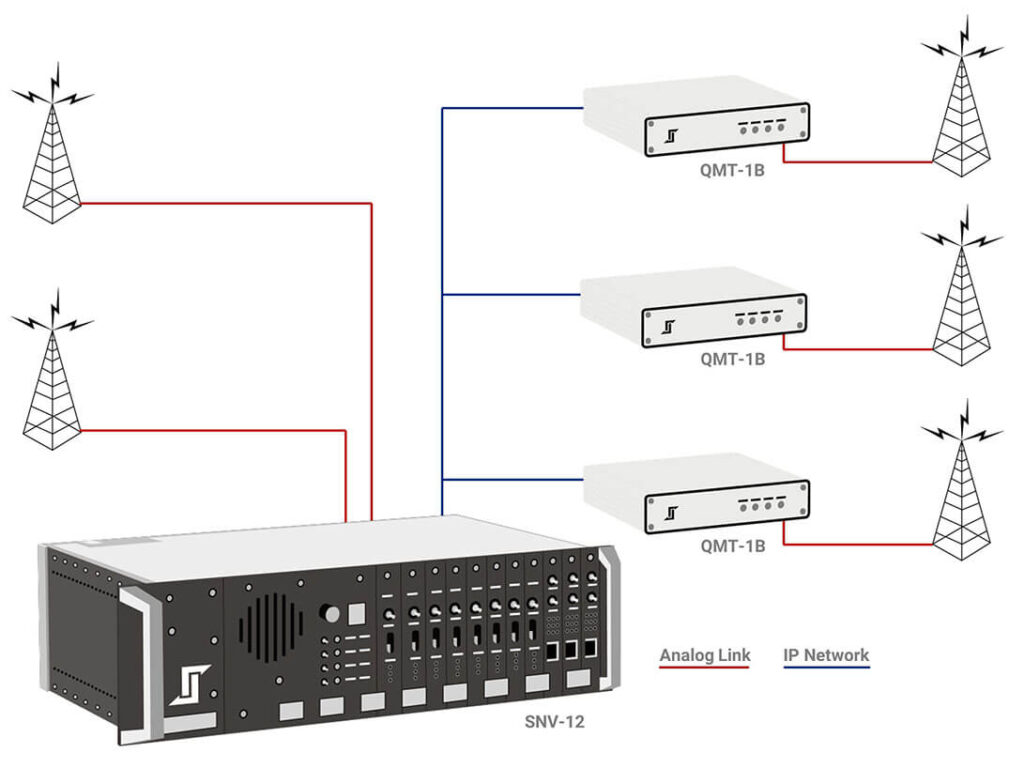
The SNV-12 Signal-and-Noise Voter accesses and analyzes backhaul audio from receiver/transceiver sites that use traditional analog backhaul such as leased lines, and also from receiver/transceiver sites that use IP backhaul methods such as a private network or IP microwave. The 64Kbps vocoder for IP backhaul ensures the delivery of clear, high-quality audio.
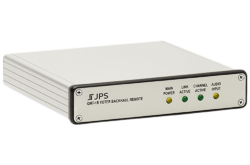
The SNV-12 votes the highest quality audio by analyzing the audio signals, regardless of backhaul method. In order to do this, when IP backhaul is used, the QMT-1B™ (for Quality Measurement & Transport) remote is co-located with the radio at the receiver/transceiver site. The QMT-1B provides timing information, digitizes the audio, and sends it to the SVM-3/SVM-3B module channel it is associated with on the SNV-12.
The Industry Leader
SNV-12 Voters are in use by entities as diverse as emergency response, utility management, and train/rail transport. When costly leased lines are replaced, or when RF coverage is limited – by distance, by obstacles like mountains, or even just thick walls – or when a smooth handoff to dispatch is required, the SNV-12 reliably expands radio system coverage.
Greater Talk Back Range
A typical SNV-12 Signal-and-Noise Voter application is an LMR system in which mobiles and portables can hear a repeater, but the repeater can’t hear them, due to their lower transmit power and/or the antenna size or placement.
Remote receivers can be positioned in the communications dead spots, with audio from each receiver linked to the voter via IP or T1 microwave, IP fiber, landline, twisted pair, RF link, or fiber optics. The voter will select the best quality signal from all unsquelched remote receivers and forward this signal to the repeater for rebroadcast or monitor by a dispatcher, thus providing greater talk back range for the radios.
Latest Firmware
IP-Capable or Mixed Backhaul:
CPM-5: 1.03
MIB file: 1.0 (use with SNMP & CPM-5)
CPM-3: 3.03
SVM-3B: 1.01
SVM-3: 1.11
QMT-1B: 1.05
Analog-Only Backhaul:
CPM-3: 1.11
JPS offers 24/7 technical support via email and phone. For more information, visit our Support Page or visit our interactive Help Center.
The SNV-12 is FCC Part 15 Certified to prevent unintended electromagnetic interference.
All JPS products are covered by a standard 18 month warranty. For more detailed information, review our Warranty Terms.
Size
5.25”H x 19” W x 11” D (13.3 x 48.3 x 28 cm)
Voting
SVM-2 implements both Lowest Noise (FM) and Highest Signal-to-Noise (AM or HF) voting. SVM-3 implements Lowest Noise (FM) voting.
Input Power
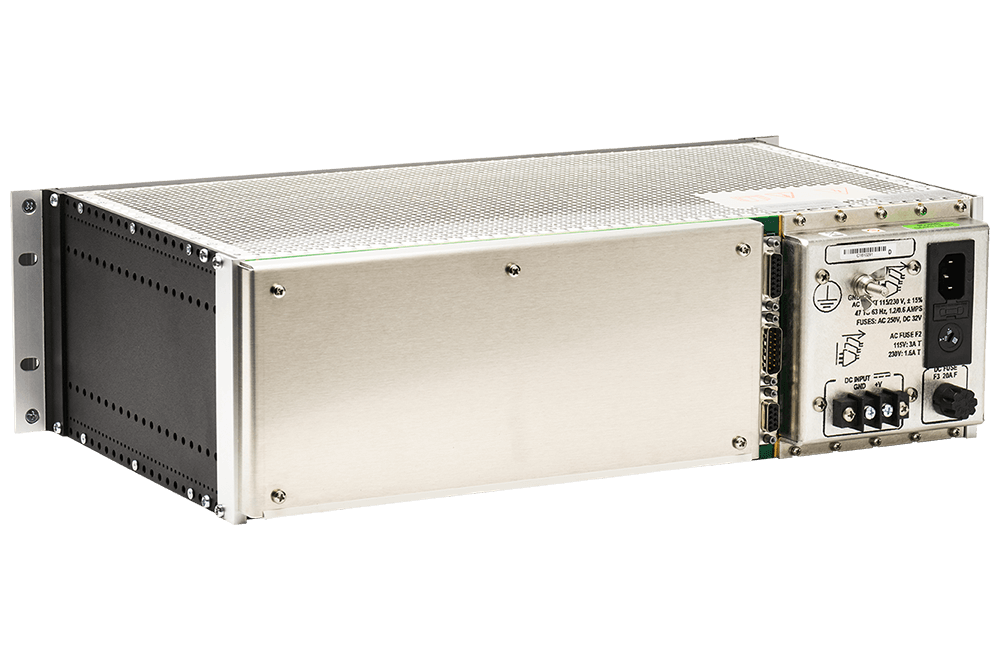
115 or 230 VAC +/- 15%, 47-63 Hz, 130 VA maximum for fully loaded chassis
+11 to +15 VDC @5A nominal
+11 to +15 VDC @5A nominal
Network Interface
RJ-45 Connector; 10/100 Base-T Ethernet, Web Configuration, Telnet
Want to learn more?
Work with our experts to build the right solution for your needs.